🧺 Before the next thrift trip, check what you actually use
A small record that earns its shelf spaceBefore another thrift-store trip, revisit what you brought home—and one thing you left behind. Record what you use, what still needs a place, and why a past purchase did or did not work for you. This is a checklist to reopen before buying, and a useful answer when a friend asks how you choose.
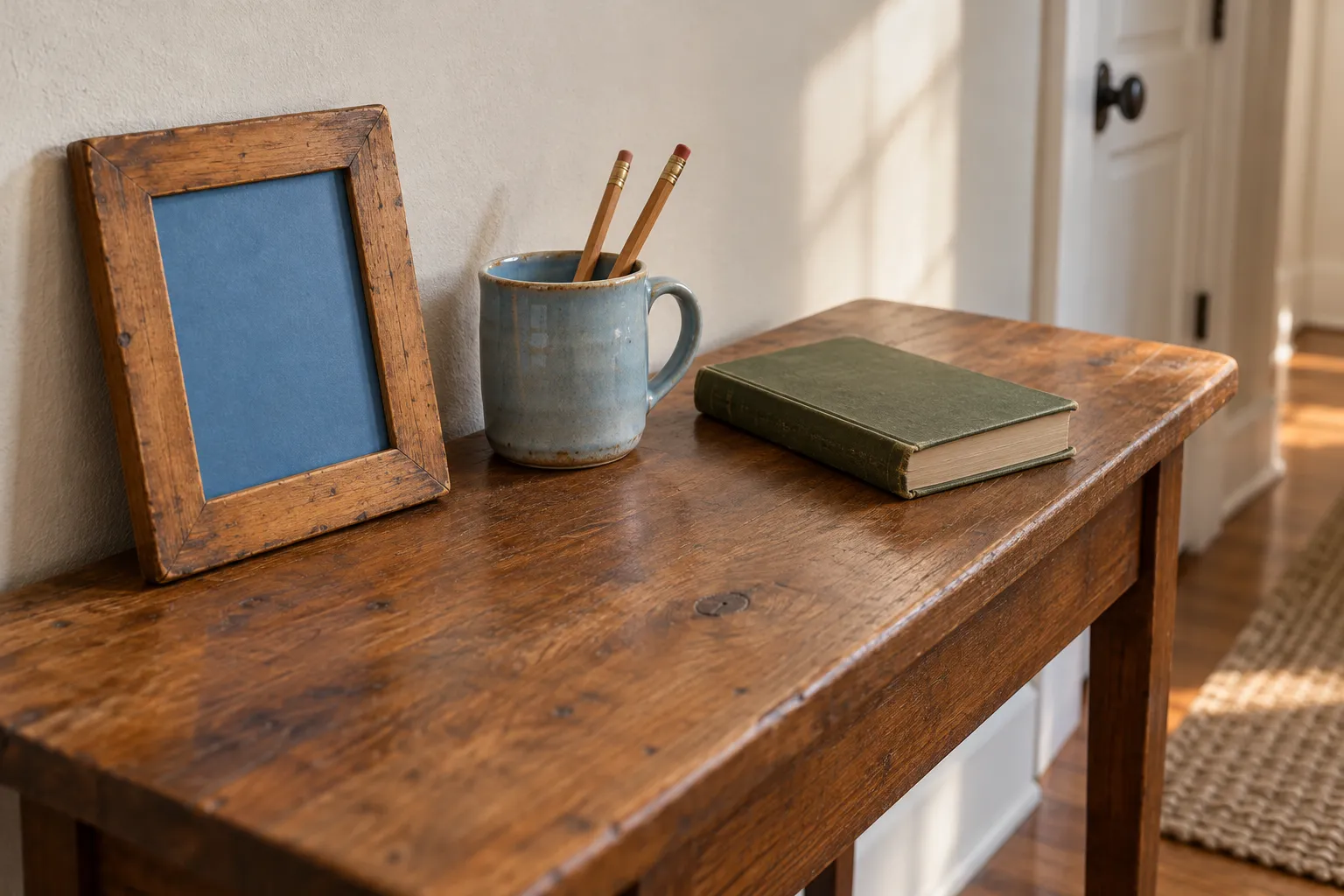 One find in its actual home
Photograph a find where it lives now, rather than staging another shopping haul. A mug holding pencils or a frame on the hallway shelf can show the point. Add one sentence about when you last used it; if you cannot remember, leave that question open.
The space the next find would take
Choose the shelf, drawer or corner before choosing another object. Note the space available and take a photo that you can check in the store. An item can be lovely and still have nowhere to live. Do not turn an empty space into a shopping target if you do not need anything.
The details you can actually check
For a book, frame or small decorative object, note visible wear, dimensions and any missing pieces that matter to you. Record the seller’s description separately from your own observations. If a detail changes the decision and you cannot check it, leave it as an unanswered question.
The extra work after the price tag
Would the object need parts, a new frame size or work you do not know how to do? List that before deciding. This card records the unfinished task; it does not need to solve it. Keep the item on your maybe list if the effort is still unclear.
The one you left behind
Give a passed-over item a short note too: no place for it, no use for it, or simply not this time. Photograph it only if the shop allows it. The reason is useful even without a picture, and you do not need to turn a sensible no into a missed opportunity.
Your two-line note for the next visit
Finish with one thing you use often, why it works, and one kind of purchase you want to pause. Put those two lines first when you reopen the record. If you share it with a friend, show your own choices rather than treating them as rules everyone should follow.
Put what you know, your stories, or your favorite things into cards. Share them with a link anyone can open, no account needed.
Start on Stepzu