Guide a guest with landmarks, not guesses
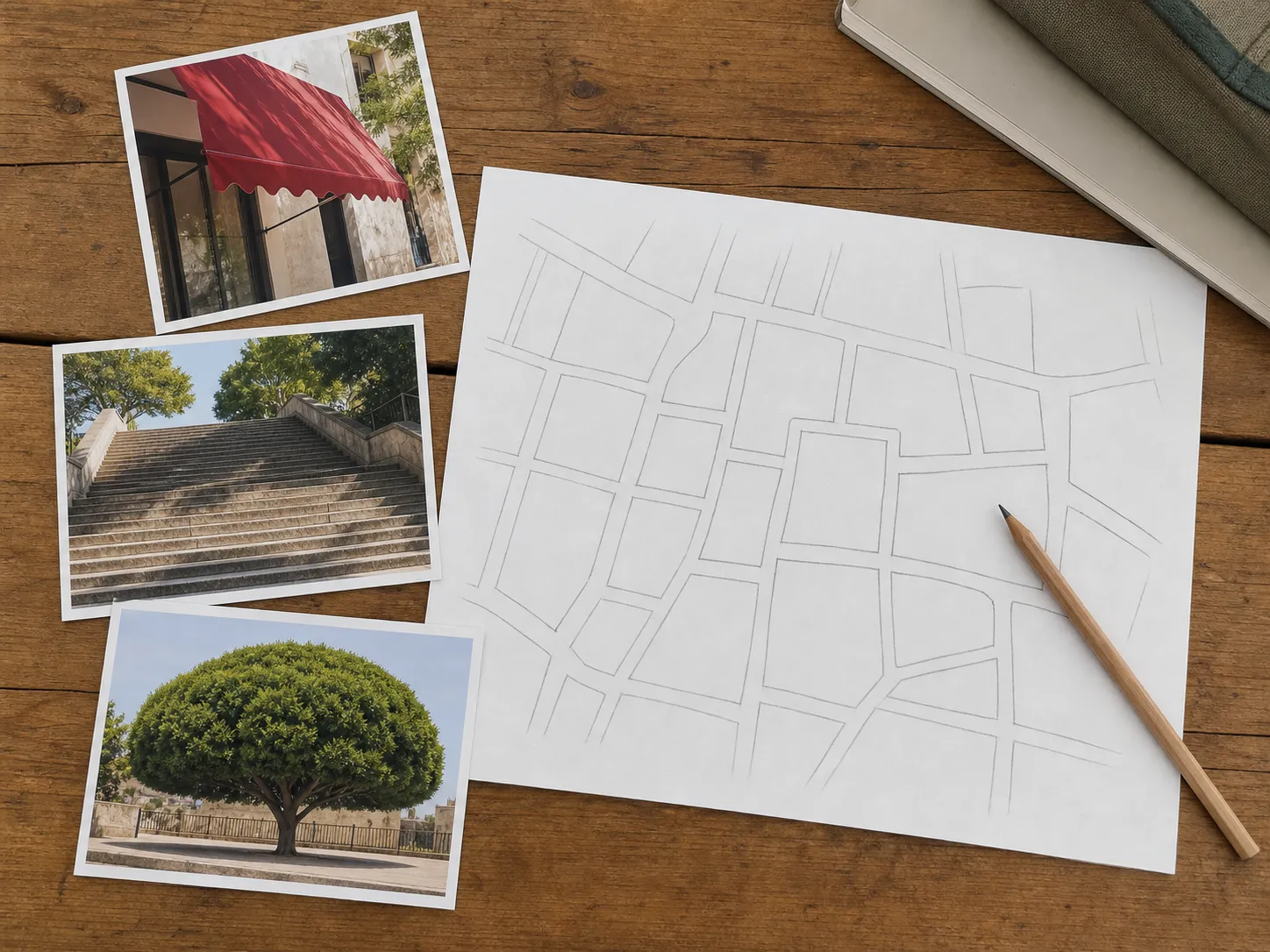
The last few minutes are often the hardest to explainA map can reach the right block and still leave a guest circling the wrong entrance. Make a short visual route from a clear meeting or transit point to the door they need. Use stable, public landmarks and keep private access details out of the shared guide.
Step 1
A starting point with only one meaning
Name the exact exit, corner, or meeting point where the route begins. Add a photo facing the direction the guest should move. If there are two similar exits or platforms, say how to tell them apart without relying on temporary signs.
Step 2
The first large, stable landmark
Choose something visible from a distance and unlikely to move: a bridge shape, a broad building feature, a public sculpture, or another permanent marker. Describe where it should appear in the guest's view, not just its name.
Step 3
The turn people usually miss
Photograph the confusing turn from the guest's direction of travel. Note what happens just before it and what they should see immediately after. Avoid instructions based on parked vehicles, construction barriers, or businesses that may close.
Step 4
The correct entrance, without private details
Show the exterior entrance closely enough to distinguish it, while excluding house numbers, access codes, nameplates, license plates, and faces. If the entrance is not obvious, describe a public visual feature rather than posting security information.
Step 5
 Send private access separately
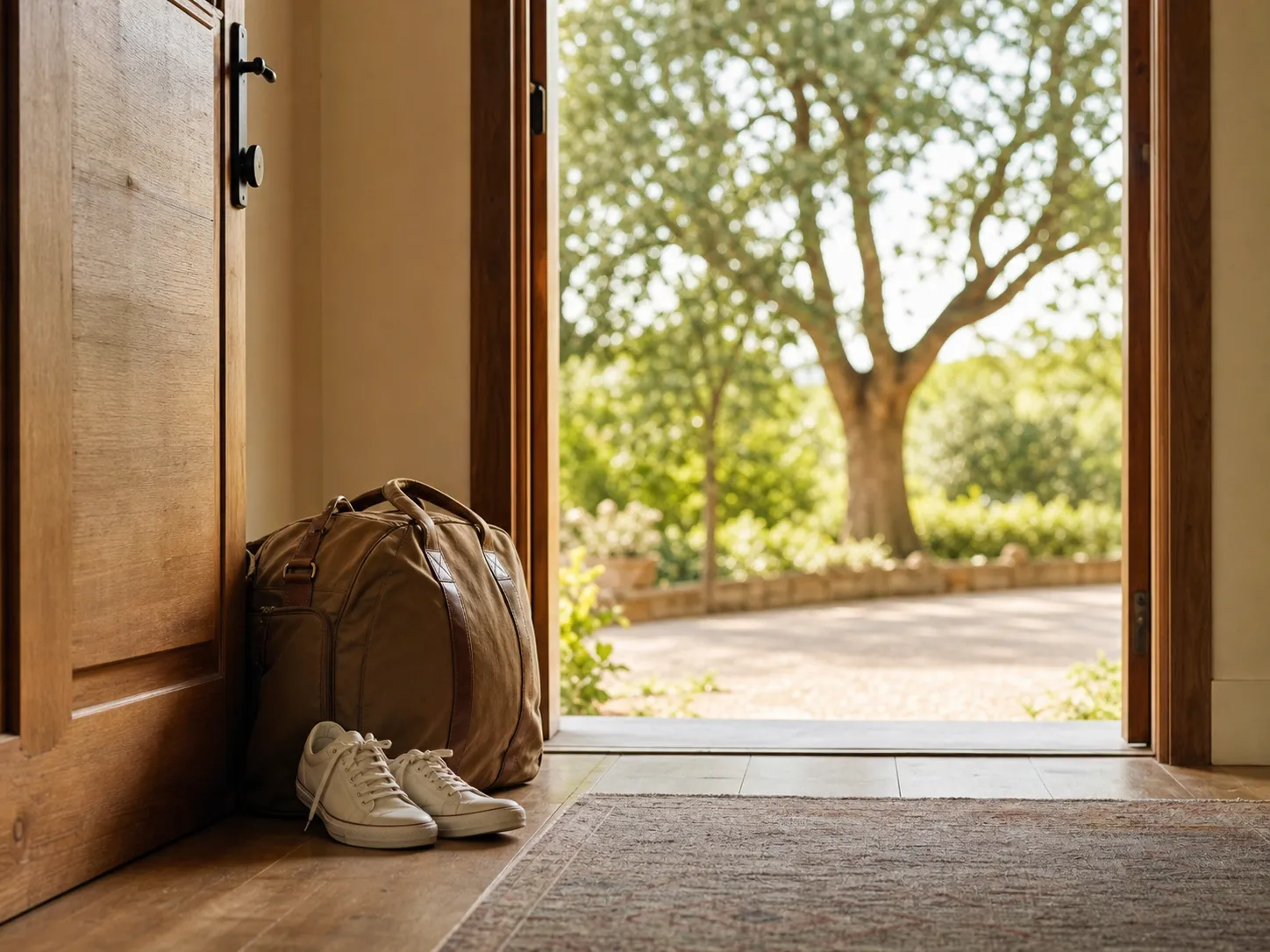
Put the five route images in order and walk the route once to test them. Send any door code, unit number, or personal phone detail in a separate private message only when it is needed. Reuse the landmark guide, but recheck it when construction or transit changes.
Send private access separately
Put the five route images in order and walk the route once to test them. Send any door code, unit number, or personal phone detail in a separate private message only when it is needed. Reuse the landmark guide, but recheck it when construction or transit changes.
Send private access separately
Put the five route images in order and walk the route once to test them. Send any door code, unit number, or personal phone detail in a separate private message only when it is needed. Reuse the landmark guide, but recheck it when construction or transit changes.
Put what you know, your stories, or your favorite things into cards. Share them with a link anyone can open, no account needed.
Start on Stepzu