A room told by afternoon light
Keep the light, not just the roomLate-summer light can make the same room look like several different places in one afternoon. This is a small photo story, not a home-improvement task: return to one viewpoint, notice what changes, and leave future you a map of a day that would otherwise disappear.
Step 1
Frame one — the quiet room
Begin before direct sun reaches the main surface. Photograph the whole room from a fixed doorway or corner, leaving ordinary objects where they are. This first frame is the baseline; it does not need to look styled or finished.
Step 2
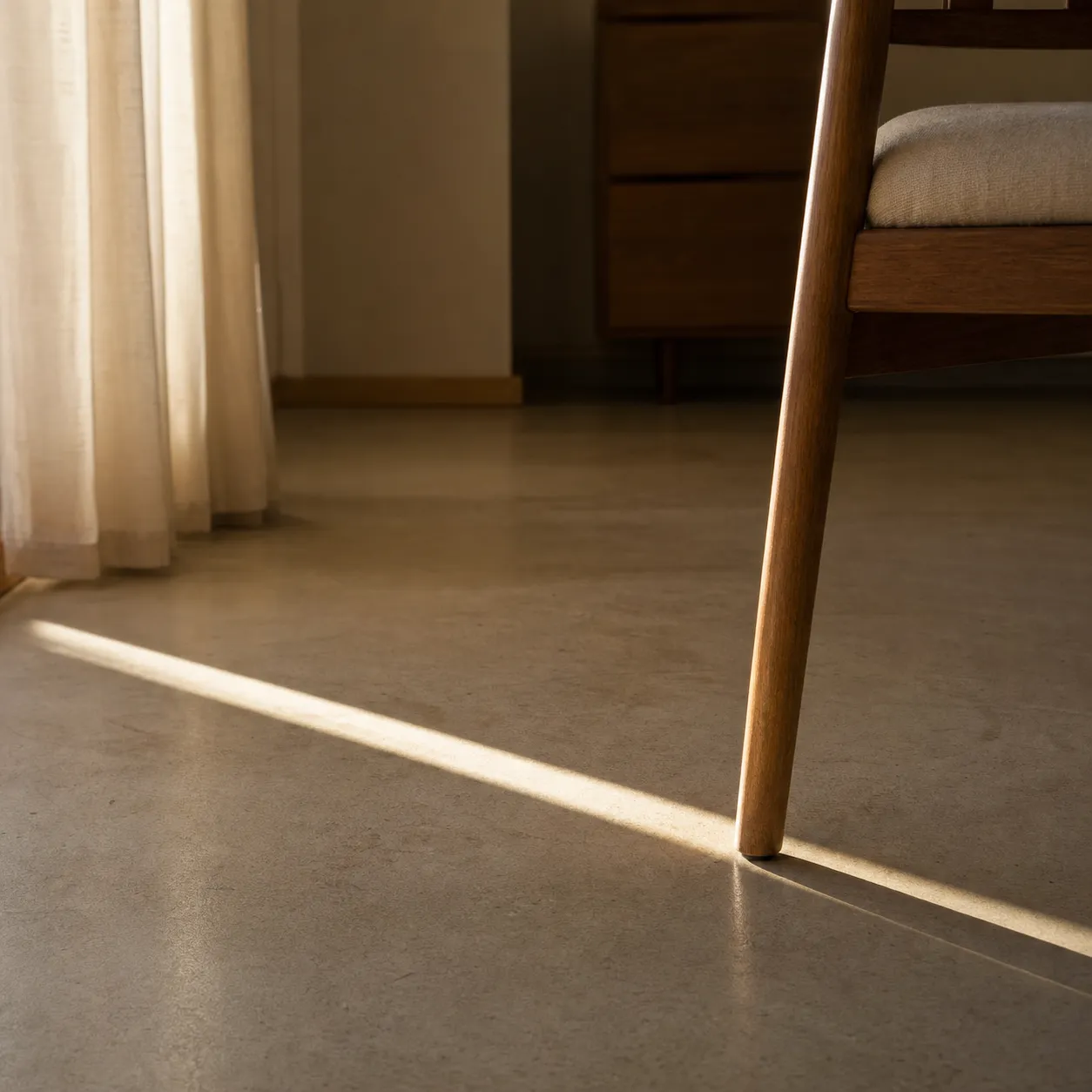 Frame two — the first bright edge
When the first sharp patch appears, photograph where it enters and what it touches. Note the time without trying to explain it. A strip on the floor, one chair leg, or the side of a plant is enough to begin the story.
Frame two — the first bright edge
When the first sharp patch appears, photograph where it enters and what it touches. Note the time without trying to explain it. A strip on the floor, one chair leg, or the side of a plant is enough to begin the story.
Frame two — the first bright edge
When the first sharp patch appears, photograph where it enters and what it touches. Note the time without trying to explain it. A strip on the floor, one chair leg, or the side of a plant is enough to begin the story.
Step 3
Frame three — the object that changed
Choose one familiar object that looks different in the warmer light: a glass, folded fabric, a book spine, or a bowl. Move closer for this card. The room's story becomes personal when one ordinary detail gets a turn.
Step 4
Frame four — what the light skipped
Turn toward the part of the room that stayed cool or dim. Photograph the contrast rather than another bright patch. The untouched corner gives the sunny frames scale and keeps the set from becoming seven versions of the same image.
Step 5
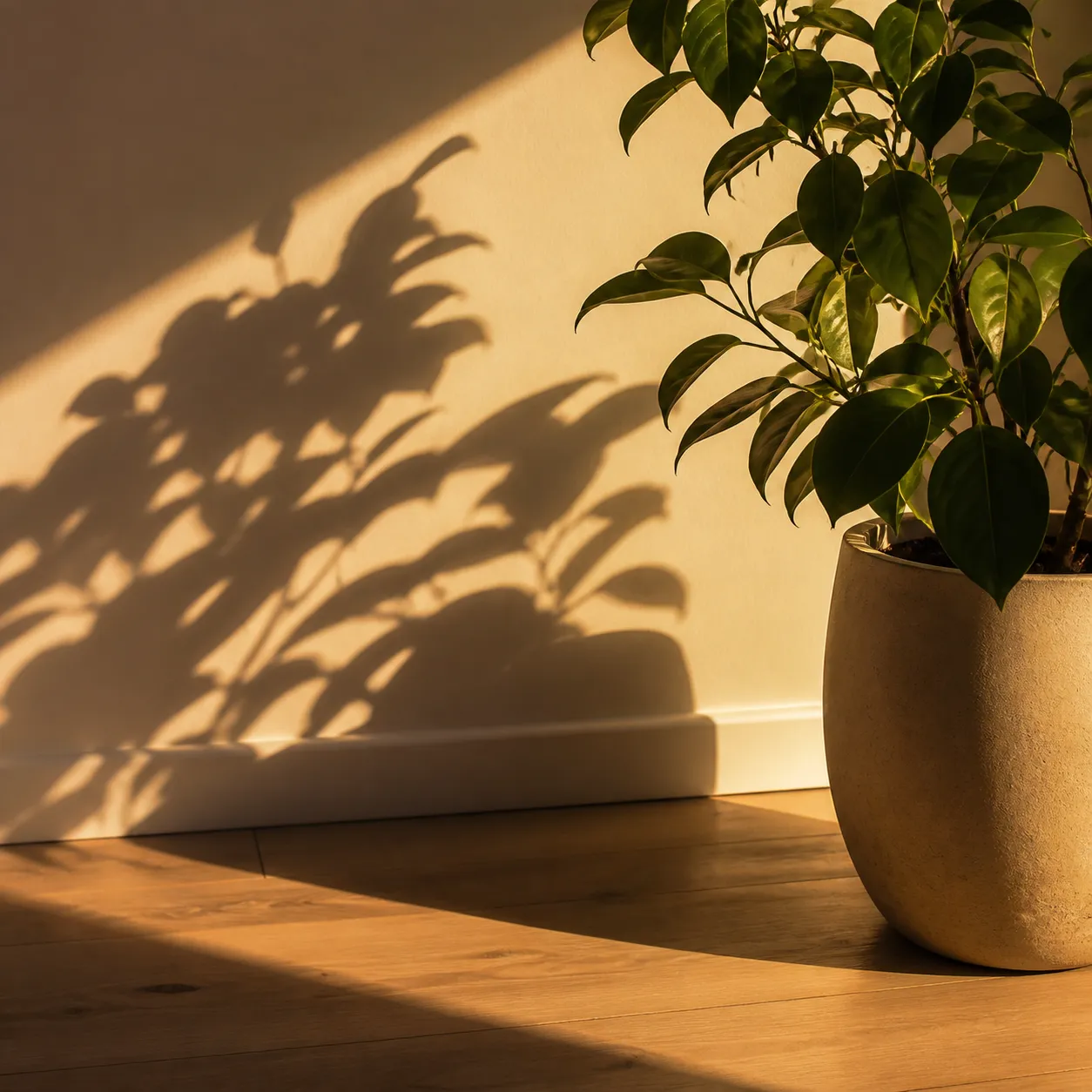 Frame five — the longest shadow
Wait for a shadow with a recognizable shape, then include both the shadow and the object casting it. This frame records distance and direction without needing a diagram. Do not rearrange the room just to make the geometry dramatic.
Frame five — the longest shadow
Wait for a shadow with a recognizable shape, then include both the shadow and the object casting it. This frame records distance and direction without needing a diagram. Do not rearrange the room just to make the geometry dramatic.
Frame five — the longest shadow
Wait for a shadow with a recognizable shape, then include both the shadow and the object casting it. This frame records distance and direction without needing a diagram. Do not rearrange the room just to make the geometry dramatic.
Step 6
Frame six — the color shift
Near the end of the afternoon, return to your original wide view. Compare the wall, floor, and windows with the first frame. Write one plain sentence about the color or mood that changed; avoid editing the photo until the light looks unlike itself.
Step 7
The map you keep
Place the frames in time order and title them with their times or small observations. Finish with one line about when you would like to sit, read, photograph, or remember in this room. The set can be shared as a portrait of a place, not instructions for fixing it.
Put what you know, your stories, or your favorite things into cards. Share them with a link anyone can open, no account needed.
Start on Stepzu