Remember a family dish through five senses
A recipe is not the whole memoryBefore a familiar dish becomes only an ingredient list, record how it actually arrives at the table. Use what you can see, hear, smell, touch, and taste, then ask about what you cannot know from observation. You are preserving a present meal, not inventing a family legend.
Step 1
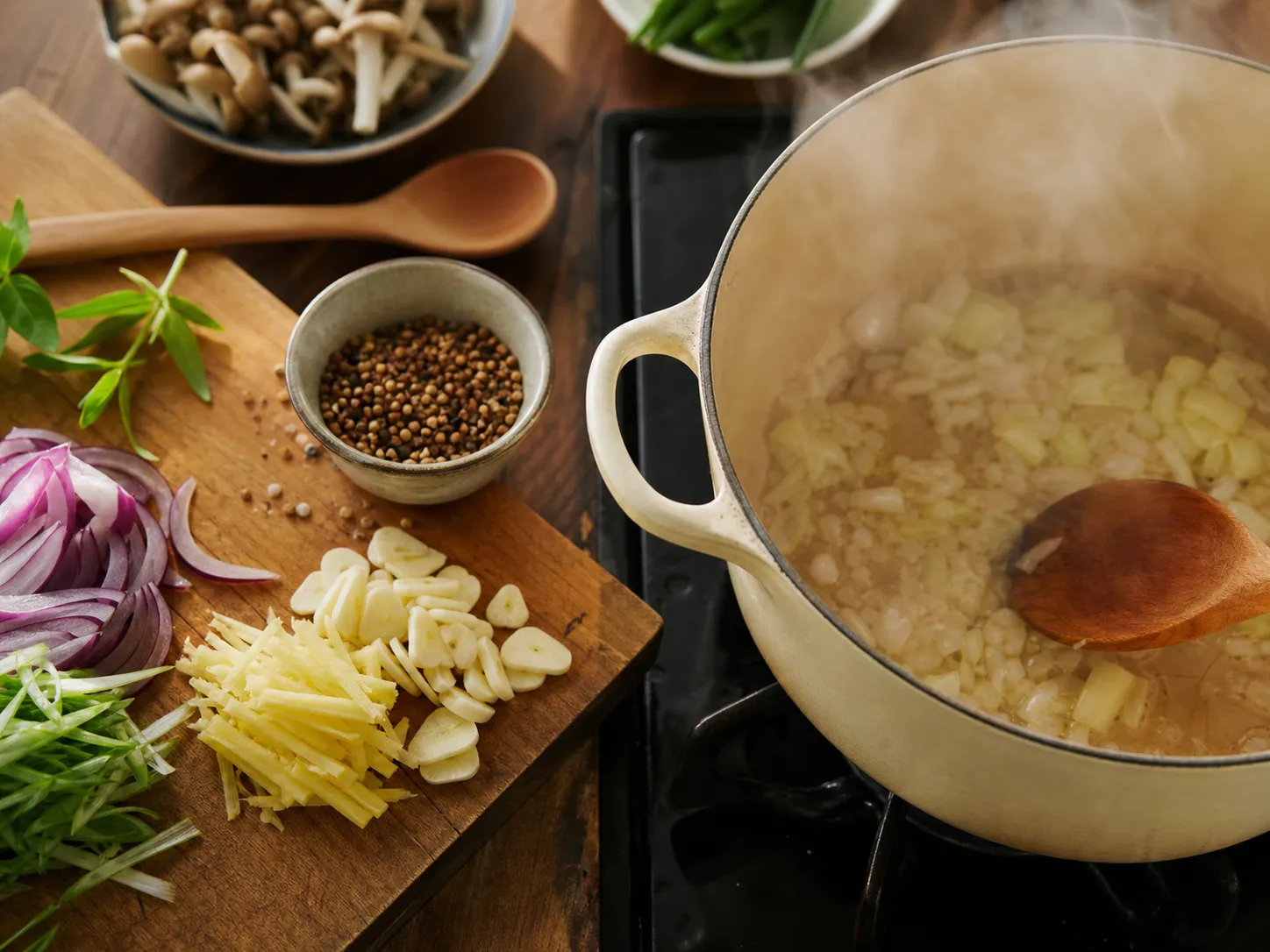
What the table sees first
Photograph the dish as it is served, including the bowl, plate, or pot that belongs to the moment. Note its shape, color, and arrangement before anyone changes it. Keep faces and private details out unless everyone involved wants them included.
Step 2
What you hear before the first bite
Listen for the sounds around serving: a spoon against the pot, a crust breaking, steam escaping, or a room settling. Describe the sound precisely, even if the honest note is that this dish arrives quietly.
Step 3
Where the aroma changes
Notice the first aroma, then what becomes clearer when the dish is stirred, cut, or cooled. Use plain comparisons from your own experience. If you do not recognize an ingredient, leave it as a question rather than turning a guess into fact.
Step 4
The texture that identifies it
Record the contrast you would miss in a written recipe: crisp against soft, broth against a firm bite, or the particular thickness of a sauce. Note where that texture appears and how quickly it changes on the plate.
Step 5
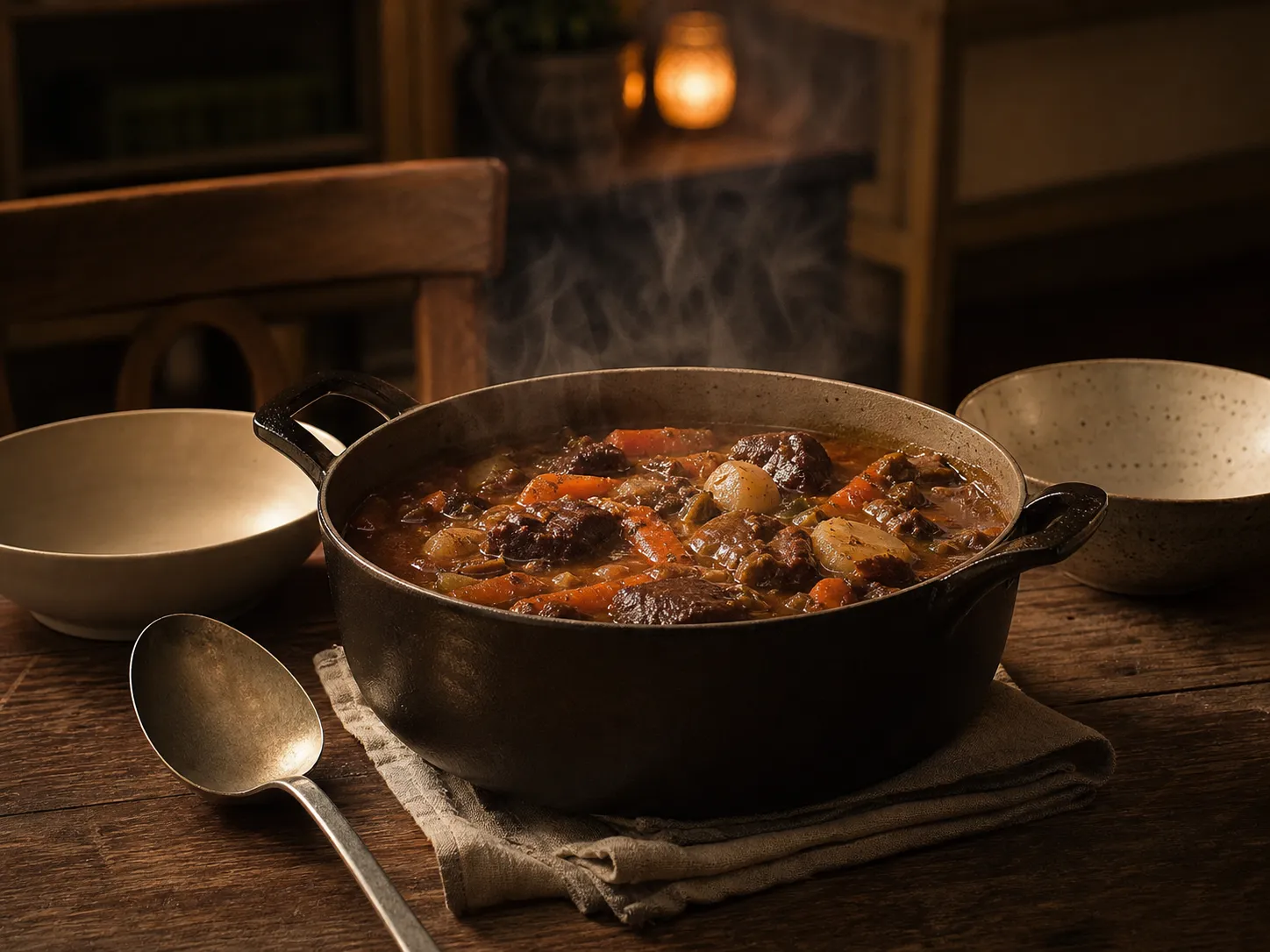 Ask for the detail only a person can give
After tasting, ask the cook or another family member one specific question: what they watch for, what they changed over time, or which serving detail matters to them. Keep their answer in their own words without embellishing it, and send the five notes back to the people who share the dish.
Ask for the detail only a person can give
After tasting, ask the cook or another family member one specific question: what they watch for, what they changed over time, or which serving detail matters to them. Keep their answer in their own words without embellishing it, and send the five notes back to the people who share the dish.
Ask for the detail only a person can give
After tasting, ask the cook or another family member one specific question: what they watch for, what they changed over time, or which serving detail matters to them. Keep their answer in their own words without embellishing it, and send the five notes back to the people who share the dish.
Put what you know, your stories, or your favorite things into cards. Share them with a link anyone can open, no account needed.
Start on Stepzu