Map one block by ear
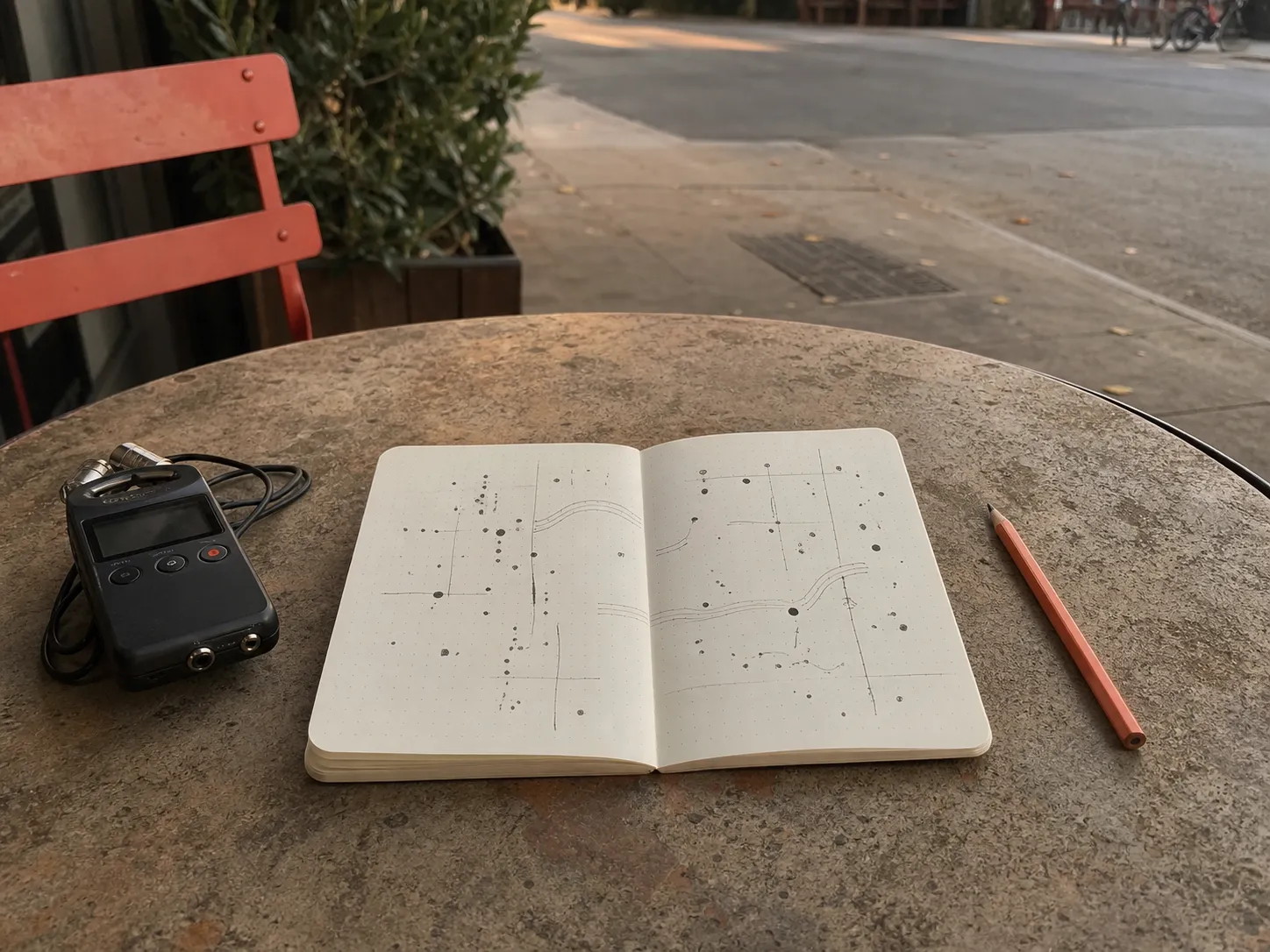
A place has a voice before it has a nameWalk one familiar block slowly and collect the sounds that locate you there. This is not a noise survey or a list of complaints. It is a small portrait made from what stays, what passes, and what you nearly miss.
Step 1
The sound underneath everything
Pause at the start and listen past the loudest event. Note the steady layer beneath it: ventilation, distant traffic, leaves, refrigeration, or something else. Describe its texture in your own words rather than guessing its source.
Step 2
The sound that belongs to this corner
At the next stop, wait for a sound you would not expect to hear everywhere. Record ten seconds if it is appropriate, or write a precise line: where you stood, how close it felt, and whether it repeated.
Step 3
Where the block changes key
Notice the point where the soundscape shifts — perhaps an open storefront gives way to homes, or a sheltered stretch opens to the street. Mark that change on a simple route instead of trying to capture every sound.
Step 4
The smallest sound you almost missed
Stand still long enough for one quiet detail to emerge. It might be a latch, a bicycle freewheel, a bird under an awning, or something entirely different. Keep the observation exact and avoid recording a private conversation.
Step 5
 Leave yourself a way back
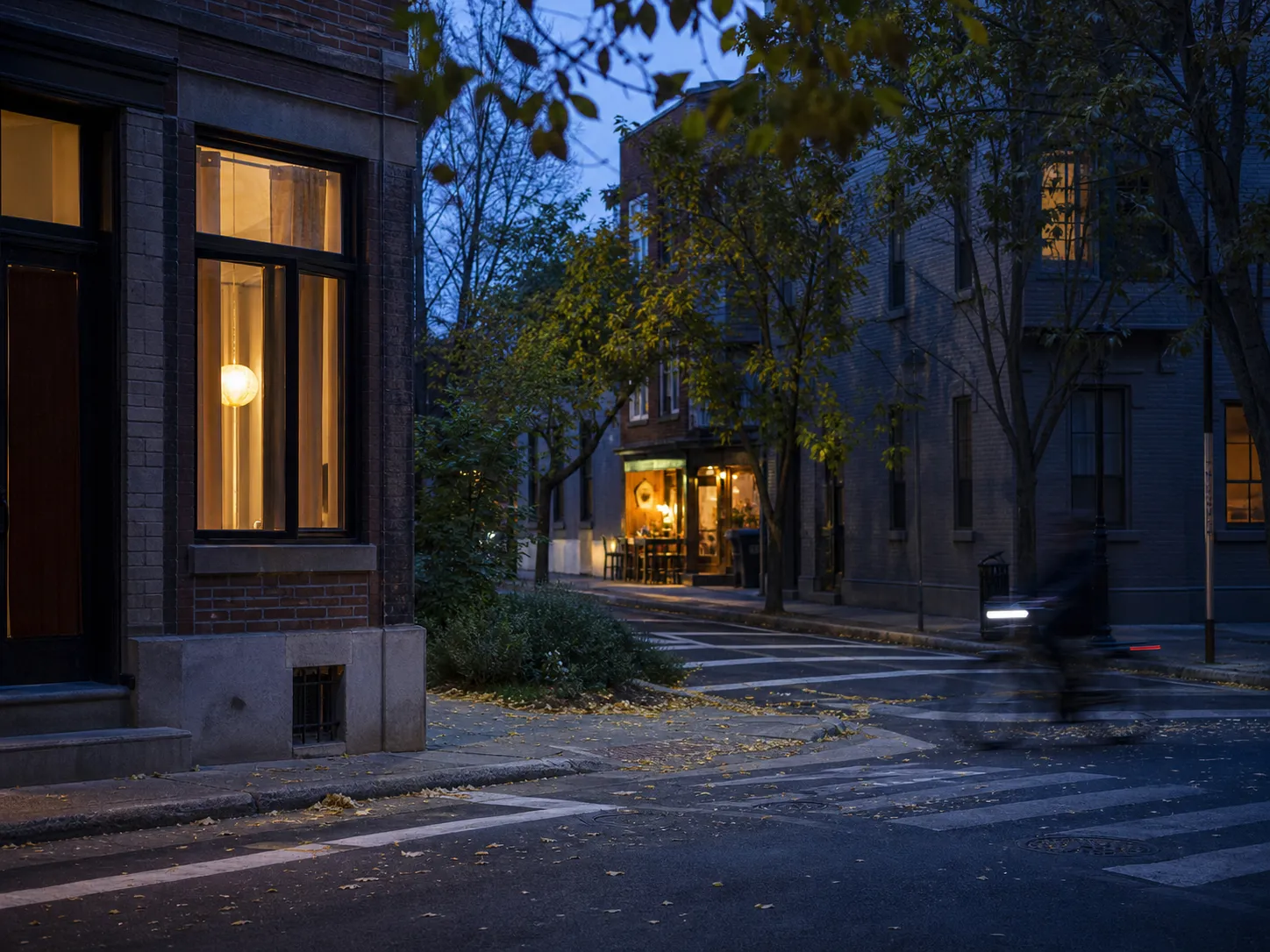
Put the five listening points in walking order and add one closing sentence: what time of day this block sounded like itself. Revisit the same route in another season, or send the map to someone who knows the place and ask what they hear differently.
Leave yourself a way back
Put the five listening points in walking order and add one closing sentence: what time of day this block sounded like itself. Revisit the same route in another season, or send the map to someone who knows the place and ask what they hear differently.
Leave yourself a way back
Put the five listening points in walking order and add one closing sentence: what time of day this block sounded like itself. Revisit the same route in another season, or send the map to someone who knows the place and ask what they hear differently.
Put what you know, your stories, or your favorite things into cards. Share them with a link anyone can open, no account needed.
Start on Stepzu