Curate a five-object exhibit at home
Five ordinary things can make an argumentA shelf becomes an exhibit when the objects share a question, not just a color. Choose five things you already own and arrange them around one idea: repair, distance, daily use, a material, or another lens only you would notice. The point is not value. It is attention.

Step 1
The object that names the idea
Start with the clearest example of your lens. It should help someone understand why the other four belong without requiring a long explanation. Place it first, but leave enough room for the collection to breathe.
Step 2
The object that changes the scale
Add something notably smaller, larger, heavier, or more delicate. The contrast makes both objects easier to see. Keep the relationship meaningful rather than choosing difference for decoration alone.
Step 3
The object that carries use
Choose something with a visible trace: a worn edge, a repaired seam, a faded surface, or another honest sign of handling. Record what can actually be seen. Do not invent a story the object cannot support.
Step 4
The object that complicates the set
Let the fourth item resist the obvious pattern while still answering the same question. This is often the piece that turns a neat arrangement into a conversation. Write one sentence about the tension it adds.
Step 5
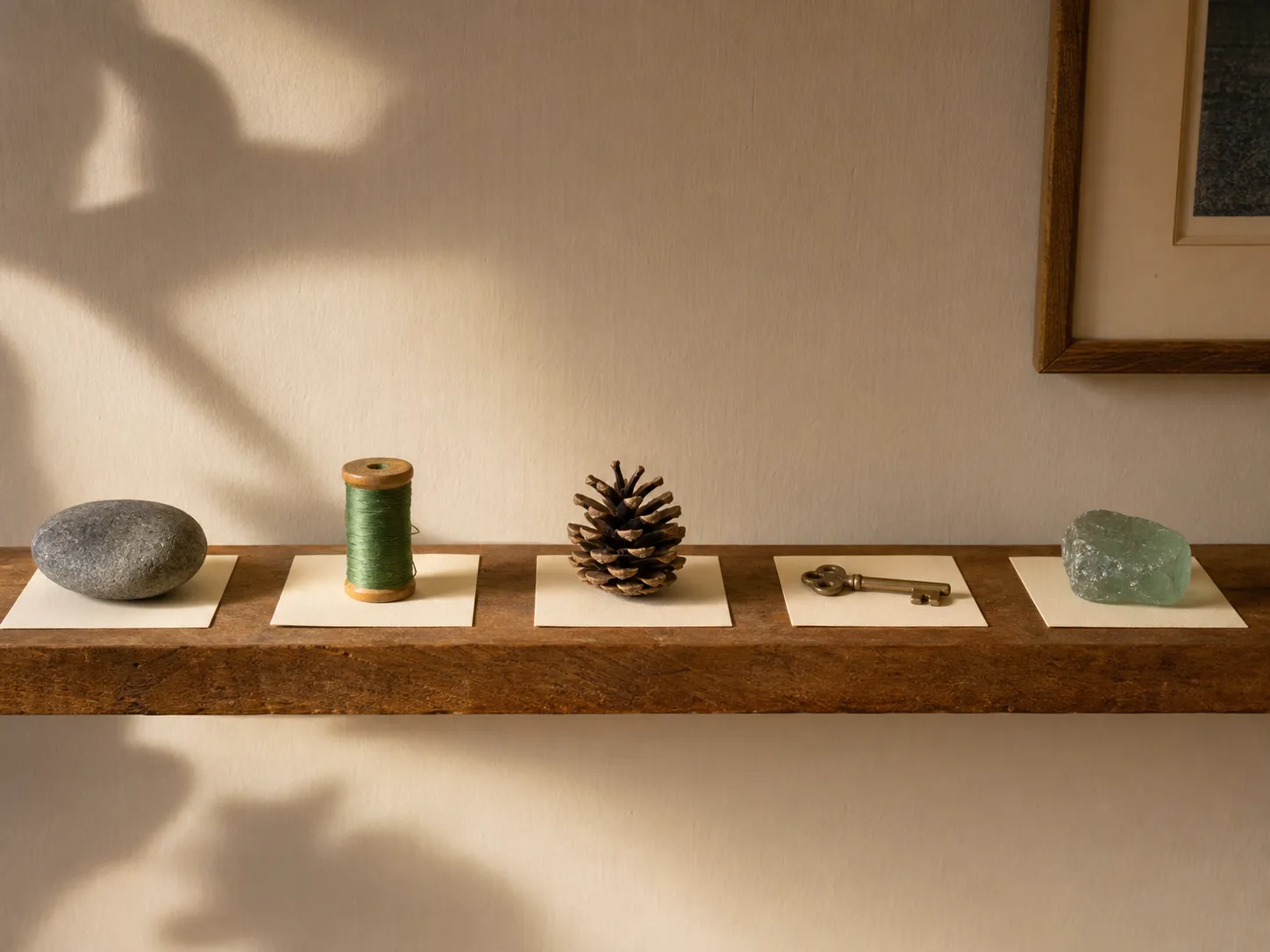 The object that leaves a door open
Finish with an item that points beyond the shelf: something unfinished, recently found, or ready to be used again. Give all five objects short labels that explain why they belong, then photograph the exhibit and send it to someone who might curate a different five.
The object that leaves a door open
Finish with an item that points beyond the shelf: something unfinished, recently found, or ready to be used again. Give all five objects short labels that explain why they belong, then photograph the exhibit and send it to someone who might curate a different five.
The object that leaves a door open
Finish with an item that points beyond the shelf: something unfinished, recently found, or ready to be used again. Give all five objects short labels that explain why they belong, then photograph the exhibit and send it to someone who might curate a different five.
Put what you know, your stories, or your favorite things into cards. Share them with a link anyone can open, no account needed.
Start on Stepzu